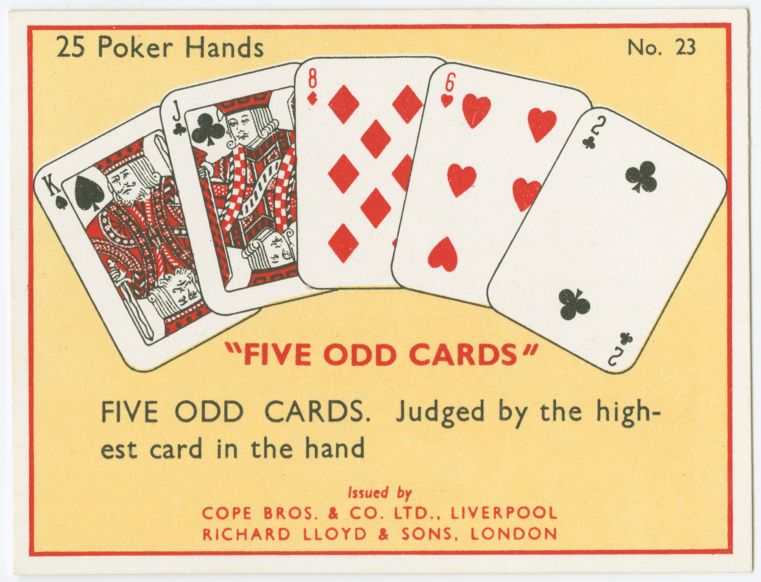
The “five things” format dates back to the days of Livejournal, apparently. I was prompted to try it by this piece by Summer Brennan.
1.
“Things would go so much better for them if they just listened to me and took my advice,” Natasha said, and I was thinking how much I agreed with that. For example: The big man with the bike he had parked straddling two racks in the Caltrain, half an hour earlier, so his ride not only overlapped and blocked in two other bikes but also made it difficult for anyone else to strap another bike into either rack. I had put my bike in, after some fiddling, so it was more or less aligned with one of the racks, but it was still pinning down the front end of his. Of course he wanted to get off before I did — his bike lacked a destination tag so no one could have known, but I might have guessed — so as he was unstrapping his bike I got up to pull my bike away, making it easier for him to get out.
“Thanks,” he said.
“No problem,” I replied, and then, like an idiot, I added: “You know, it would be easier if you didn’t double-park across two racks.” He shrugged and turned away.
Then, after a pause, he turned back to me and said, “I didn’t really ask your opinion.”
“You don’t have to take up all that space, is all,” I said.
“Look at those racks down there,” he said. “There’s tons of room. You could have just gone down there.”
“But why would I? This one has plenty of room and it’s right by the door.”
“I’m not listening to you,” he said, putting his earbuds back in and turning away.
“That’s fine, I’m not listening to you either,” I shot back, cleverly I thought.
For the next few minutes, we stayed like that, not looking at each other or listening to each other, like two little boys after a playground tiff, until the train bumped to a stop, the lights flashed, the PA announced its warning, and the doors hissed open to let him out.
Thanks for reading Rough Drafts by Dylan Tweney! Subscribe for free to receive new posts and support my work.
2.
K said I seemed rattled yesterday, after I told her about some criticism I’d received on my book proposal. “Not rattled, disgruntled,” I said. It was fairly useful feedback, and I agreed with a lot of it, but it still had left me feeling deflated. But okay: “Maybe a little rattled,” I acknowledged.
3.
I was desperately in need of a swim so I skipped both of the 7am meditation-on-Zoom communities available to me on Wednesday mornings and drove over to Coyote Point, the cove halfway down the San Francisco Bay that’s been my primary swimming hole for a decade. The water was calm and the air mild despite a rather moody layer of overcast — but to my horror the tide was quite low, only about 3/4 of a foot above MLLW, a measure of the lowest tide. The receding water had exposed bright green seaweed-covered rocks up and down the beach. I knew from the tide chart that the water was so shallow as to be barely swimmable, and that it would soon be totally unswimmable, so I got ready quickly and waded out. I was probably 50 feet out into the squish and much before the water touched my knees, at which point I lay down into it and did my shallowest, most delicately flattened breaststroke until I was maybe 150 feet offshore and the water was finally deep enough to permit a crawl stroke without my hands digging into the muck. Then I swam with ease, away from and alongside the shore, down to the protruding rock that looks like a big, rectangular couch plonked down into the water, then swam back to the start, going as shallow as I could get before being forced to stand up and wade back out through the murky bottom again.
Fortunately there’s a shower next to the beach.
4.
I’ve read several essays recently that have me increasingly convinced that LLMs are a very poor writing tool in almost every way. (Example: What 370,000 college essays tell us about A.I.’s effects on creativity, by Rebecca Winthrop.) I want to make an exception for using AI as a brainstorming partner or as a way to get feedback and perspective on drafts I’ve written — and for using AI tools to provide line edits and copy edits — but it may be that even these uses narrow the field of possibility and guide the writer toward more conventional thinking and phrasing.
I know that, for me, the experience of asking AI to draft something is profoundly discouraging and debilitating to my sense of style. Once that draft exists, it is a struggle to edit it back toward a more human form. The field has already narrowed: More original possibilities go forever undiscovered, their absence unnoticed.
At the same time, I have been helped by AI tools when doing research, extracting insights from large bodies of data, summarizing transcripts, and distilling the main points from excessively long, wordy documents. I have used AI as a writing partner, to give me feedback on drafts of more formulaic pieces I’m working on, and I’ve created a Claude project for each of my clients, to provide a check on their preferred tone and corporate messaging. In some cases, I’ve used Claude or ChatGPT to summarize or rephrase things when I just can’t find it in me to write another paragraph about the same enterprise topic I’ve been writing and rewriting a dozen different ways for a client over the past 18 months.
So what’s my POV on AI and LLMs? Conflicted. Suspicious. Increasingly uncomfortable with it. More committed than ever to writing without it. But I’m not sure I am willing to stop using it entirely. In other words, I can’t condense my thoughts into a pithy statement just yet.
But let’s be honest: A lot of people are already using AI to create content.
I did a quick poll on this on LinkedIn, and 42% of the people in my network use AI to help with writing/content creation in some way. So I was inspired to do a slightly more nuanced poll.
Is using AI for generating content at work a net benefit or a net cost? Help me get some data on this and take a short, 3-minute survey.
5.
There’s something powerful about gathering in a room with other people to work on our writing together. There were four of us in the library yesterday, and another six online, and for an hour, all of us were working in silence, except for the scribbling of my pen and the tapping of their keyboards. It’s a pleasantly organic, embodied experience, writing like this; it reminds me of the old days in the newsroom when six or twelve of us were huddled around a large table in one room, working, together. Except in the writing circle, none of us are on deadline, and we’re all there just to support one another in our various writing projects. I noticed, at the end of that hour, that my heart rate had slowed and my anxiety levels were lower.
In other words, I was much less rattled. Maybe on the Caltrain ride home, I thought to myself, I’ll be able to avoid getting into another pointless argument with someone who isn’t even listening.
Field notes
Writing circles: If you’re interested in finding an online writing circle like the one I described above, check out Foster.
Not writing: “If the only way for me to not end up with a mistake ever again is to literally stop using AI, that’s just not realistic. If the answer is to stop writing, that’s not out of the realm of possibility.” In other words, he’d rather stop writing than stop using AI. WIRED: We Asked the Future of Truth Author to Explain How He Used AI. It Didn’t Go Well
Mary Ruefle, on listening: “I used to think I wrote because there was something I wanted to say. Then I thought, ‘I will continue to write because I have not yet said what I wanted to say’; but I know now I continue to write because I have not yet heard what I have been listening to.” Mary Ruefle in MADNESS, RACK, AND HONEY, via R. O. Kwon
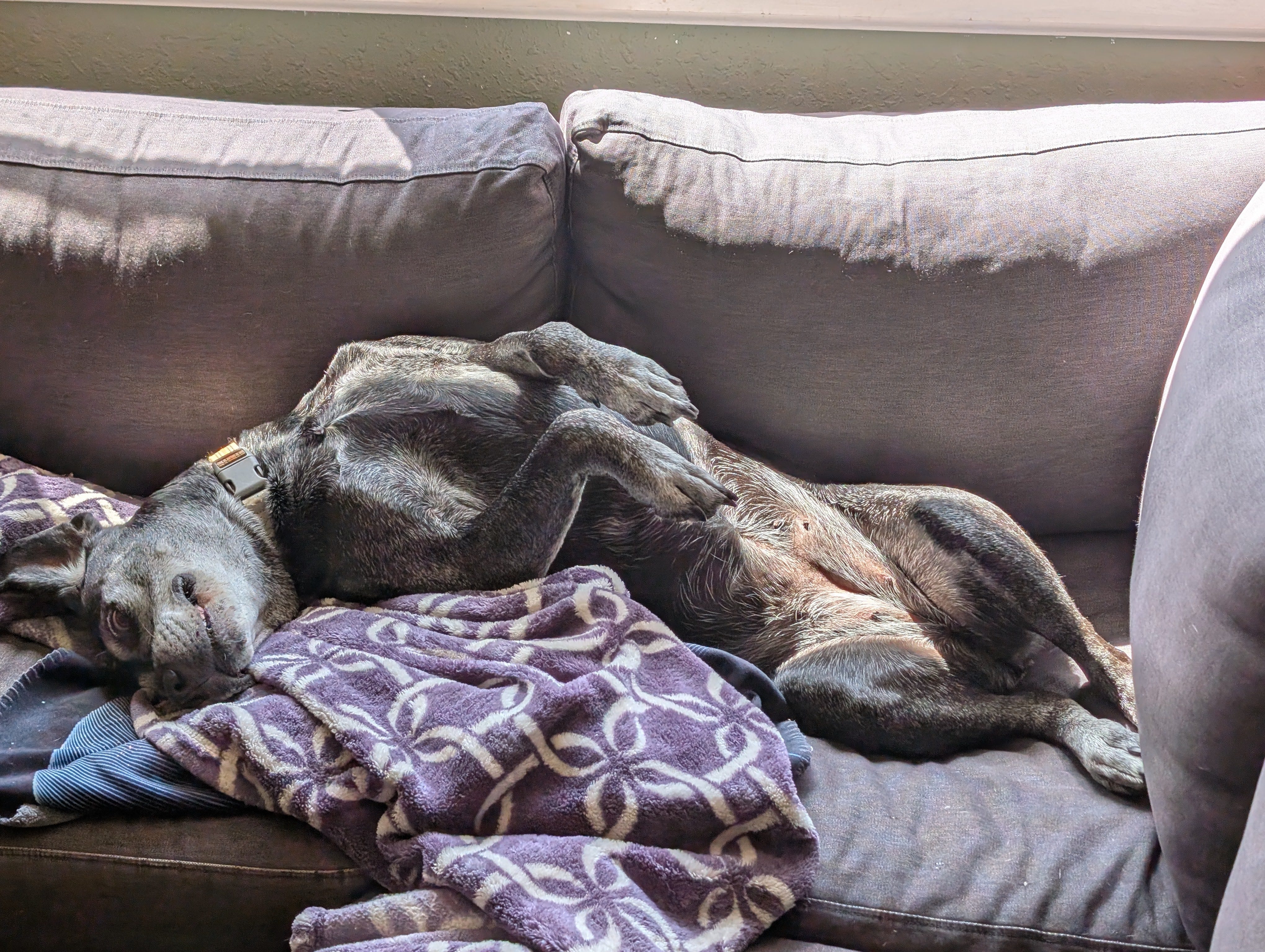
Relaxation: My dog Lucy knows how to chill out better than anyone.
Speaking of relaxing, I am going to France for a 2-week mindfulness retreat at Plum Village. I will be almost entirely offline. See you later in June!
And thank you, as always, for listening.
~Dylan~
Pingback: Poetry Blog Digest 2026, Week 23 – Via Negativa